
We Read Monica Furlong

Hello, friends! For October, instead of a general theme I’ll be spotlighting Monica Furlong, the author of “Wise Child,” one of my favorite books. Though Furlong wrote only three books for children, all in the same series and featuring the same set of characters, her work has had an outsized impact on how I aspire to conduct my own life, and the ideas that she conveyed in three relatively short works about compassion and being in balance with the world are a balm for our hyper fast-paced, hyper-reactive, hyper-polarized times.
Today we’ll look at each book in the Doran series, and next time I’ll do a round-up of picture books, middle grade novels, and YA novels that speak to some aspect of Furlong’s work. And if I manage to get my act together, I’ll throw together a spooky book round-up on Halloween 👻
As I mentioned last week, I came across “Wise Child” by chance at a used book sale happening in a church in town. I was nine years old, and with my mother, of course, and I can’t remember why she decided to visit the sale. We weren’t churchgoers and it was, in my memory, a winter evening, already dark, and I’m sure there were a million things Mom needed to get done at home. It’s entirely possible I saw a “Book Sale” sign outside and begged to go. In any case, the cover of “Wise Child” caught my eye from one of the book bins; it was so striking, so unlike any book cover I’d seen before, that I just had to take it home.
“Wise Child” is, at its heart, a story about family lost and found. The eponymous character is an orphan in medieval Scotland who is taken in by Juniper, the local witch. Wise Child quickly comes to love the wise and gentle Juniper and, under her tutelage, grows into her own powers.
The cover of the American edition, illustrated by Leo and Diane Dillon, shows Juniper and Wise Child with the instruments of their craft. Even though Juniper’s character is Cornish, not Asian, with her dark hair and golden skin she was the most perfect version of what I could hope to look like (in the late ‘80s leading into the ‘90s, the pickings for Asian American girls in popular media were laughably slim; we had to take whatever we could get).
In this way, “Wise Child” represented a lot of ‘firsts’ for me: The first time picking out a book for myself, the first time seeing someone who looked (vaguely) like me depicted, gorgeously, on the cover of a book, my first introduction to the work of Leo and Diane Dillon. I read and reread this book until the cover got frayed, and carried it with me to every place I lived, from college, to my first apartment and every apartment following it, to the house I live in now. It is a book I return to every couple of years as guide to grounding myself and to be reminded of the important things in life.
I read “Wise Child” and its prequel, “Juniper,” in the days before information about virtually any topic was widely available on the internet. So it wasn’t until adulthood that I was able to research and learn more about Monica Furlong as a person and the ideas that influenced the books she wrote for children. From all accounts, she was too acerbic to be a serene Juniper-like figure in real life, but the messages in her books about tolerance and non-violent conflict resolution were borne out in her own life.
Monica Furlong was born in 1930 in Kenton, Greater London, England, and passed away in 2004 at the age of 72. She was baptized as Anglican and spent her adult life advocating for the ordination of women in the Church of England, for changes to the law in support of gay clergy members and wider LBGTQA+ community, and to draw attention to issues concerning incarcerated people. In other words, she was a total badass.
Though Furlong had a strong personal sense of religious spirituality, she grew disillusioned with the formal structure of the Church of England, in particular with its refusal to ordain women as priests or allow them other formal roles. She continuously called on the Church to adopt more progressive policies and was involved in advocacy groups that pushed for reform. She was an early moderator in the Movement for the Ordination of Women (MOW) and co-founded the St. Hilda Community, an egalitarian group of clergy and laypeople that invited ordained women from overseas to lead services and celebrations (which was then forbidden by the Church). Both MOW and St. Hilda disbanded in 1994 when the Church of England moved to finally ordain women.
During the same period, Furlong also wrote several non-fiction books, including biographies of religious figures like Thomas Merton and St. Therese of Lisieux, and a collection of writings by and about medieval women mystics. Her writing emphasized the human side of these sometimes distant figures set apart from ordinary people by the strength and depth of their spiritual fervor. She portrays Therese, for example, as a strong-willed child who was not above badgering her father until she got her way. Such strength of will drove her conviction, harbored from a young age, to enter the Carmelite convent at Lisieux, but Furlong also suggests, not without affection, how it might have made her difficult to live with at home.
In “Visions and Longings: Medieval Women Mystics,” Furlong presents the writings of Christian women mystics working between the eleventh and fourteenth centuries. She was clearly interested in the different lifestyle arrangements that each woman came to, whether ensconced in a convent, as a layperson in the world, or in self-operated communes with other women, and the ways in which they negotiated their own faith and dedication to God with the social statuses and relationships that constrained their ability to pursue learning or authority in the secular world.
Furlong worked through much of the same ideas in the three books in the Doran series. The women mystics became non-Christian women (and some men) who conducted their lives in service of balance, harmony, and self-awareness as a prerequisite to peaceable and intentional action. Some of the characters, like the Juniper of “Wise Child” and the doran Angharad, do appear saintly in their demeanor, but more often Furlong’s protagonists are wholly human and fallible. Wise Child is cranky and stubborn; young Juniper, having been raised as a princess, is careless; her doran teacher, Euny, is harsh and unrelenting; Colman turns away from his own powers, preferring, for the moment, to lead an ordinary life.
In each book, Furlong revisits the questions of how to live a life of meaning and inclusivity, what it looks like to combat hatred with love, and how to make a difference in a fearful, punitive world while adhering to the principles of nonviolence and harmonious living.
Apart from everything else, the Doran books are examples of solid, engaging writing that’s suitable for middle-grade readers and engaging enough for older teens and adults. The language isn’t difficult but it is wonderfully evocative, especially of the natural world and characters’ experiences of being in the world.
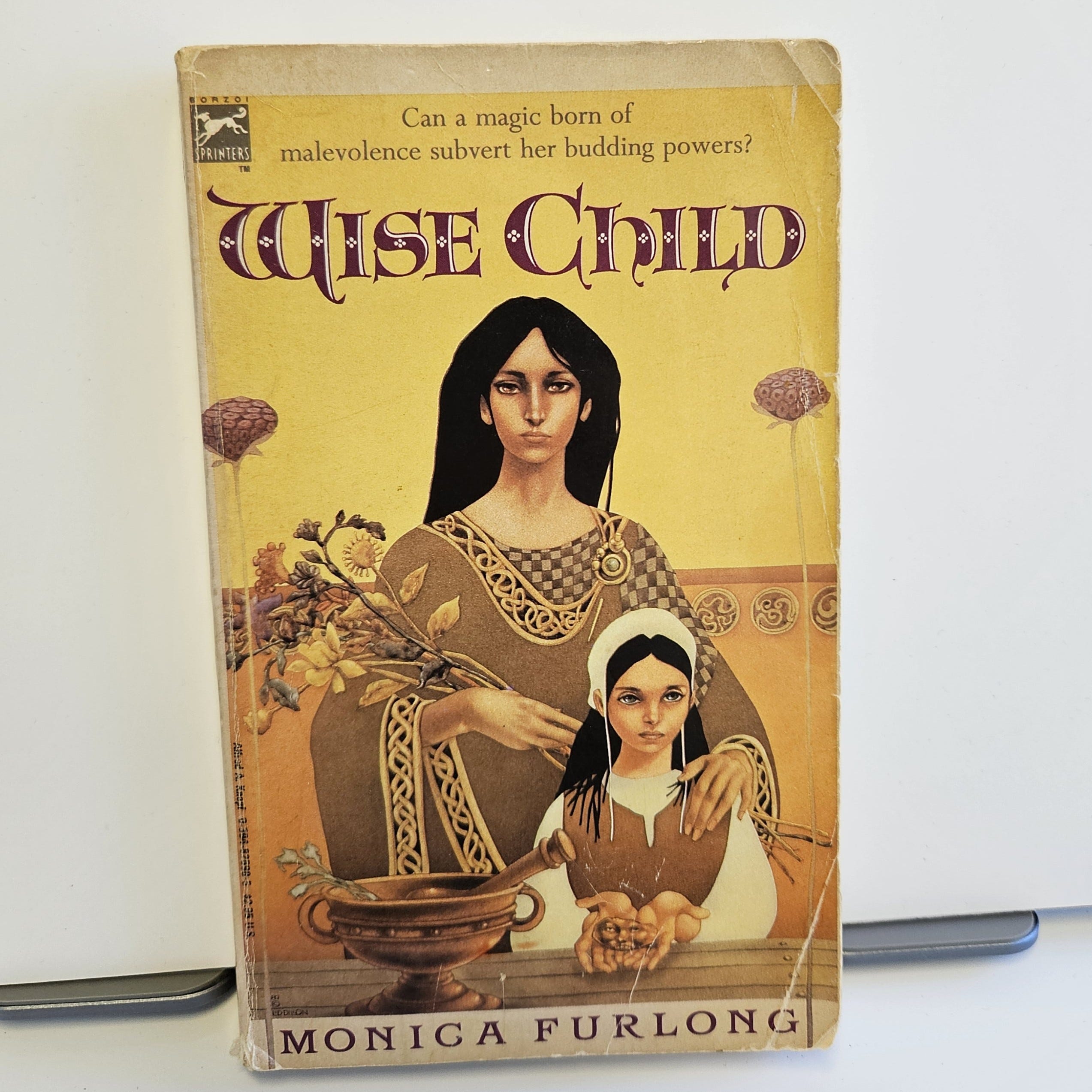
In 7th century Scotland, a girl named Wise Child has been left alone in the world. Her grandmother has just died, her mother, the beauty Maeve, long ago abandoned the family, and her beloved father, Finbar, is at sea on a trading expedition. On the brink of destitution, Wise Child is unexpectedly taken in by Juniper, the village’s wise woman and rumored witch. Life in Juniper’s house is filled with simple pleasures and hard work in equal measure. Juniper even teaches Wise Child the ways of the doran, a person who lives in balance with the world and who sometimes uses magic in life-affirming ways. But when Maeve suddenly reappears in Wise Child’s life, she must choose between two very different kinds of power.
This slim book is packed with big ideas - about the allure and danger of wealth and power; about choosing one’s family; about the difference between wielding institutional authority and leading a moral life. Most of all, it is about living a life of intentionality and balance. There is enough genuine witchiness woven in to lift the story out of didacticism.
“Wise Child” is the only book in the trilogy that features the Christian Church and that uses a conflict between Church theology and pagan practices as a plot point. I can imagine Furlong working out her frustrations with the Church of England’s conservatism through this book, particularly its marginalization of “deviant” figures of a community (in the book, a kind-hearted leper named Cormac) and censure of women’s voices and authority in the formal structure of the Church. Fillan, the town’s priest, fears and hates Juniper not only for her paganism but also because she is a woman who wields power outside of his control. The book’s antagonists, Fillan and Maeve, whose actions invalidate their claims to authority over others. Fillan preaches about the Bible’s lessons but acts with un-Christian malice and suspicion toward Juniper, Wise Child, and Cormac. Maeve invokes her rights as Wise Child’s biological mother but treats her with only indifference, if not outright cruelty. It is Juniper, an outsider in every sense that matters in Wise Child’s world, who truly embodies the moral and ethical qualities that Fillan and Maeve should possess.
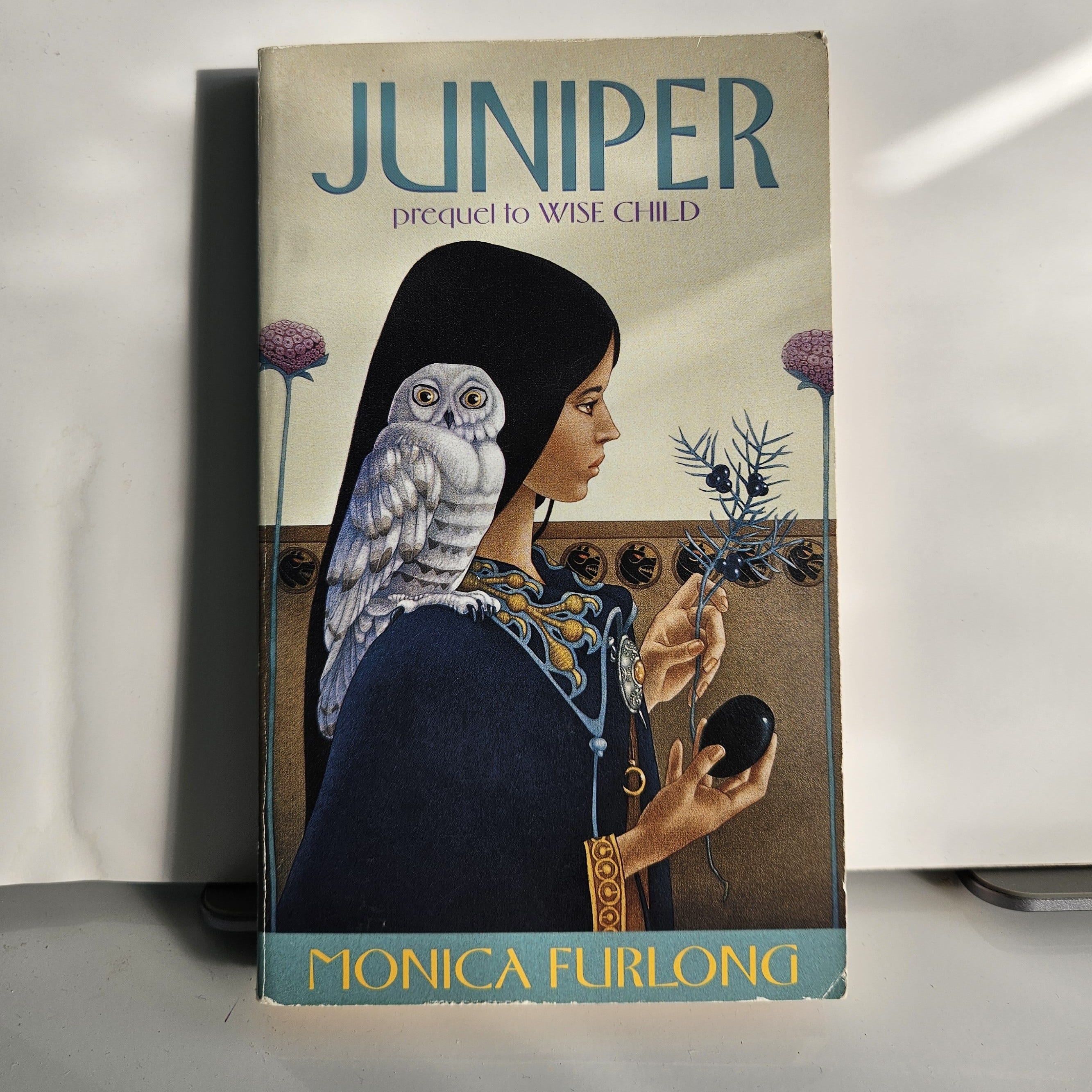
This prequel to “Wise Child” follows Juniper’s journey, as a teenaged girl, from a luxurious and sheltered life as the daughter of King Mark of Cornwall to a harsh apprenticeship under the doran Euny, whose deliberate life of poverty masks great power. Soon, Juniper must call on every bit of her training as a doran to counter the malevolent plans of her aunt Meroot, a sorceress who bears a deep resentment against King Mark and will stop at almost nothing to destroy his kingdom and everyone that Juniper loves.
Like in “Wise Child,” “Juniper” contemplates the many ways to live either a life of harmonious balance or one diminished by malice. Several pairs of characters seem to be in conversation with each other as their contrasting motivations and circumstances advance an argument about autonomy and how one’s response to adversity can shape the trajectory of a life. The most obvious comparison is between Meroot, a cruel sorceress who manipulates her son for her own ends, and the dorans, who revere all life and dedicate themselves to creative, not destructive forces. But Furlong also draws a contrast between Euny, who chooses to live on the thin edge between survival and death as a way to access life’s mysteries, and Angharad, a doran who becomes Juniper’s second teacher and who finds her way toward balance while living in much more comfortable surroundings. After Juniper faints from hunger and cold at Angharad’s house, the doran admonishes Euny for not realizing that growing girls need more sustenance than the older doran has gotten used to. It is not so much that one way is better than the other (Euny remains Juniper’s greatest life-long ally), but that a way of life must be freely chosen and entered into with love and intention to be meaningful.
The book’s most enduring lesson, to me, is one of radical empathy. In the climatic scene, Juniper faces off against Meroot, who wants to reclaim her son despite abusing him for most of the story. In the middle of the confrontation, Juniper has a vision that her mother, the Queen, has given birth to a boy, which means Juniper will not inherit the throne. In the space of an instant, Juniper works through her jealousy and disappointment and ultimately achieves clarity: how can she hate an innocent baby? Part of her life’s purpose must be to protect him and to find her own kind of power that is not dependent on wielding wealth and authority over others. In finding peace, Juniper gains insight into Meroot’s pain and extends sympathetic words to her.
Although Meroot spurns Juniper’s gesture (and is repudiated in turn), it is remarkable that where in most stories achieving clarity leads to finding the power to defeat an adversary, here it gives Juniper the strength to name a harm and offer Meroot understanding without excusing, forgiving, or minimizing the harm that she has caused. Empathy, in these books, is a measure of strength, not weakness or acquiescence.
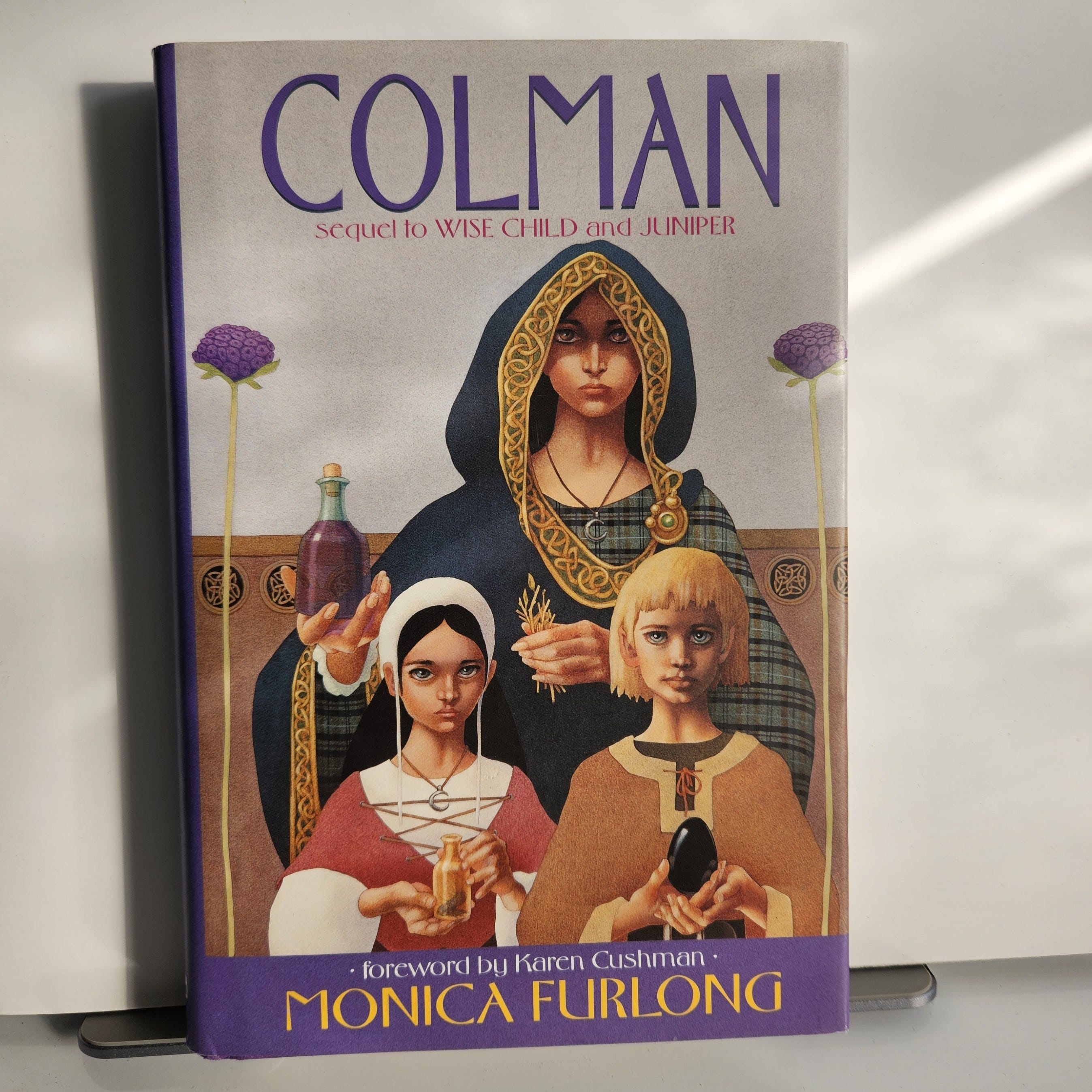
This sequel to “Wise Child” picks up where that book left off, with Wise Child and Juniper, along with Finbar, Wise Child’s cousin Colman, and the gentle leper, Cormac, on the run from villagers who have blamed an outbreak of plague on Juniper and seek her execution. The group seeks refuge in Cornwall, only to find that Juniper’s childhood home, the Wooden Palace, has been razed and that her parents are dead. Her younger brother Brangwyn has been taken hostage by Meroot to keep his subjects compliant with Meroot’s cruel demands of tribute. Wise Child devises a bold plan to defeat Meroot once and for all; Colman loyally supports and aids her, even as he is torn between accepting or denying his own growing powers as a doran.
The final volume of the trilogy, moreso than the other books, brings a sense of human fallibility to the dorans. Wise Child, who has been understandably frightened by the ordeal of being run out of town, slides into bad-tempered obstinacy for the first third of the book, to the point where Colman wonders if her abilities as a doran trainee weren’t a bit of a fluke after all. Later, Juniper struggles between obeying the flow of Wise Child’s (restored) doranic powers and acting on her instincts as a mother who resists sending her child into danger. Colman, himself, spends most of the book declining the call to his own powers, and, in a departure from conventional children’s book plotting, Furlong lets him stay in this state of limbo right to the end of the book. He’ll get there when he gets there, she seems to say, and so it goes with the rest of the characters, not to mention the plot itself. Sometimes struggles, whether internal or external, are not meant to be resolved quickly and without discomfort. Sometimes the discomfort is part of the process: you have to sit with it and work through it to find the real answers.
Colman and Wise Child’s outward adventure mirrors their internal journeys. The two children infiltrate Meroot’s castle, disguised as servants, and then, just like real servants, spend weeks doing completely ordinary drudge work, with none of the heroic derring-do and espionage that Wise Child was hoping for. The doran Euny cautions them that progress often works that way, with long stretches of getting on with life, taking small actions where one can, and waiting for the right moment to mobilize. In our current, hyper-frenetic times, such calls for patience might seem counterintuitive, even naive, but I appreciate Furlong’s invitation to step back from the noise and take stock of the actions and emotions within our own control. When we are able to achieve clarity and balance with ourselves, we are better able to radiate our energy and efforts outwards - to our loved ones, to our communities, to the wider harms in the world that need repairing.